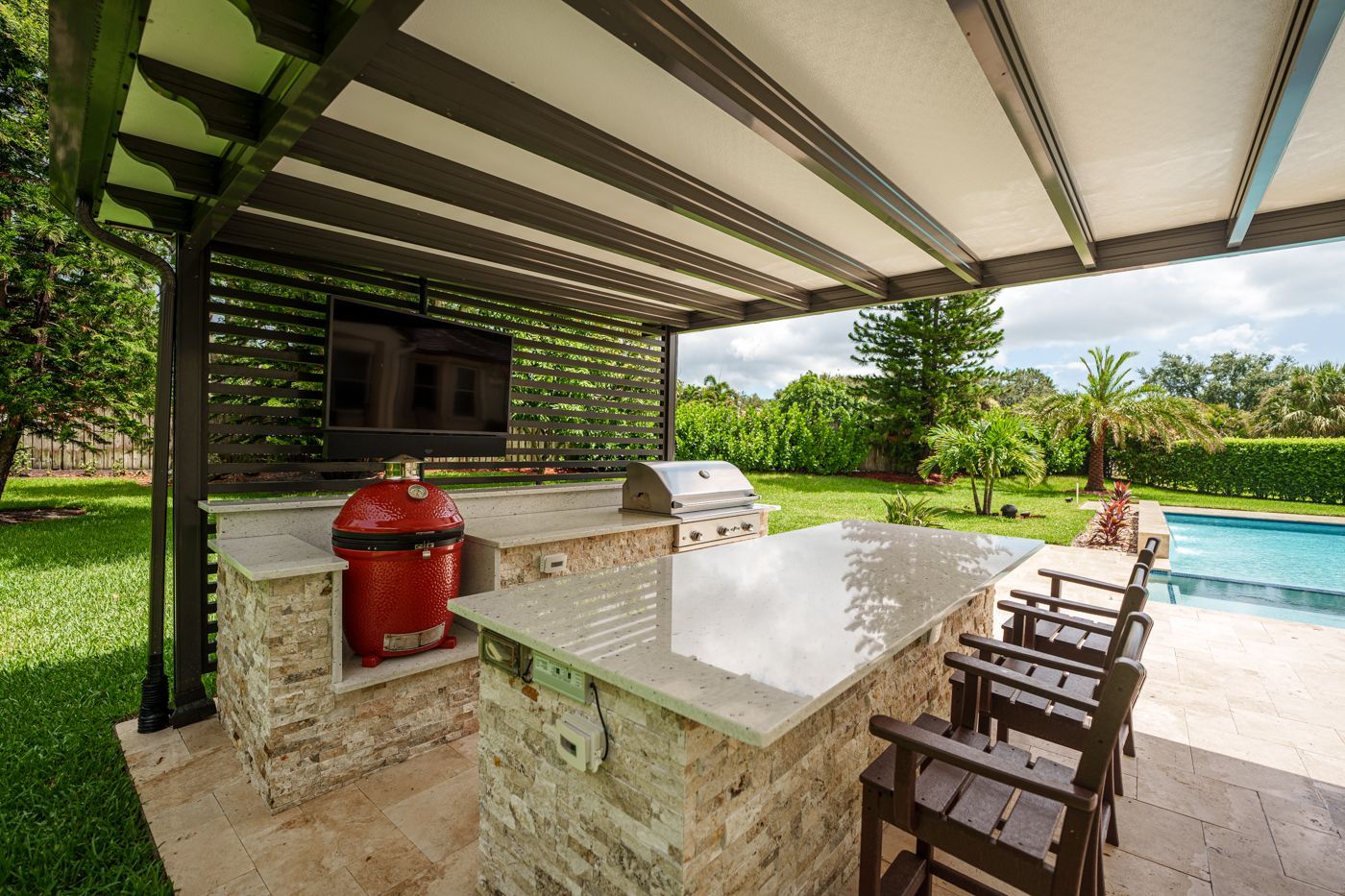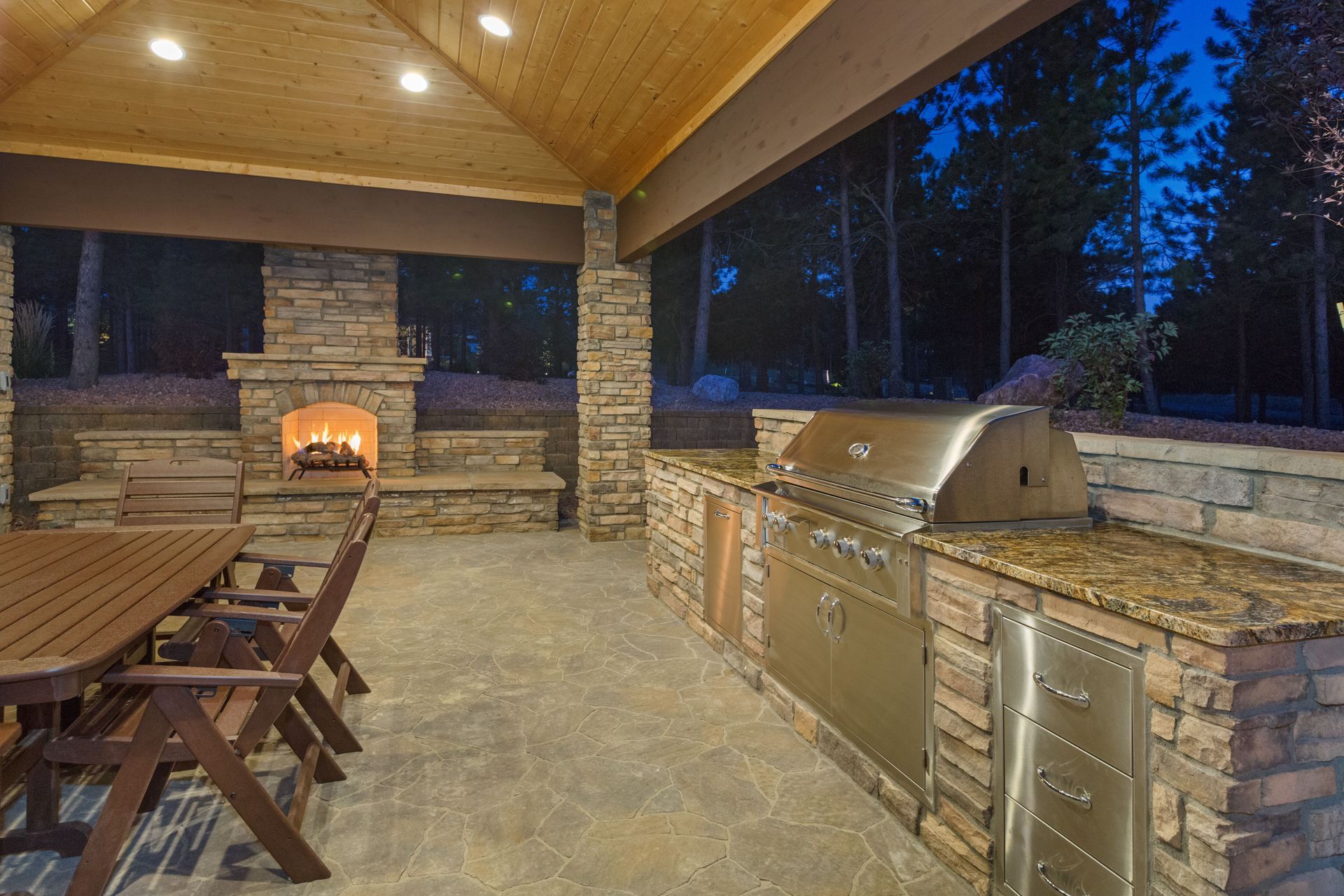
An outdoor kitchen can make cooking and entertaining more convenient while creating a comfortable space for spending time outside. However, adding grills, burners, electrical equipment, gas lines and other cooking appliances to an exterior living area also introduces safety considerations. Proper planning and regular maintenance can help reduce risks and keep the space enjoyable for family and guests.
Whether you are building a new outdoor kitchen or maintaining an existing one, safety should be considered from the beginning. Understanding how to position appliances, manage fuel sources, protect electrical components and respond to emergencies can help create a safer cooking environment. The following guidelines cover several important areas of outdoor kitchen safety, from installation and maintenance to everyday use and emergency preparation.
What Are the Essential Safety Features for an Outdoor Kitchen?
Safety features should be incorporated into an outdoor kitchen during the planning and construction stages. Appliances should have adequate clearance from combustible materials, and the surrounding layout should provide enough space for people to move safely while cooking. Noncombustible materials are generally preferable around grills, burners and other high-heat appliances.
According to This Old House, grills in an outdoor kitchen should be positioned at least 10 feet away from combustible materials, including wood siding, deck railings and tree branches. The publication also recommends incorporating storage for a fire extinguisher into the kitchen design. Keeping a suitable extinguisher readily accessible can make a significant difference if a small cooking fire occurs.
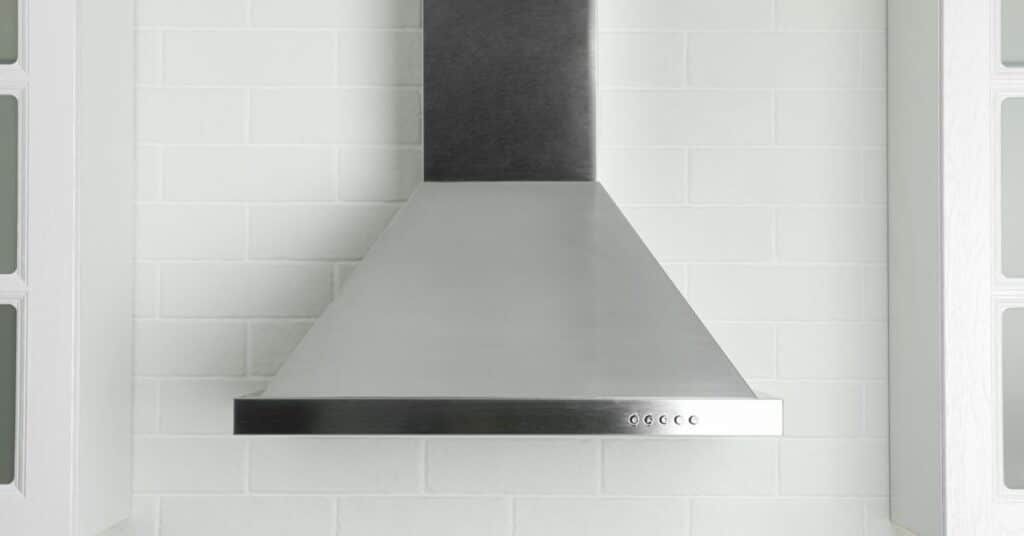
Ventilation is another important consideration, particularly when gas-powered appliances are installed beneath or near enclosed structures. Gas lines, propane connections and other fuel components should be installed according to applicable requirements. An outdoor kitchen should also have appropriate lighting so cooking surfaces, walkways and potential hazards remain visible after dark.
Electrical safety deserves attention as well. Outdoor outlets and electrical equipment should be appropriately rated for exterior use, while ground-fault circuit interrupter protection can help reduce the risk of electrical shock. Appliances should be connected and installed according to manufacturer instructions and applicable local requirements.
How Can You Safely Install and Maintain an Outdoor Kitchen?
Proper installation is one of the foundations of outdoor kitchen safety. Appliances should be installed with the clearances specified by their manufacturers, while gas and electrical connections should be handled according to applicable codes and requirements. Improvised connections or modifications can create unnecessary hazards.
The structure itself should also be designed to support the appliances and materials being used. Cabinets, countertops and other components need to withstand outdoor conditions, including moisture and temperature changes. Drainage can help prevent water from accumulating around the kitchen, while weather-resistant materials can reduce deterioration over time.
Maintenance should continue long after installation. Inspect gas hoses, connections and fittings periodically for signs of cracking, corrosion or damage. If you suspect a gas leak, turn off the fuel supply if it is safe to do so, avoid creating sparks and contact the appropriate professional.
Grills and cooking surfaces should also be cleaned regularly. Grease buildup can become a fire hazard, particularly when it accumulates around burners or beneath cooking grates. Follow the appliance manufacturer's cleaning recommendations rather than relying on improvised methods that could damage components.
It is also important to inspect electrical cords, outlets and fixtures for deterioration. Water, weather and repeated exposure to the elements can eventually affect outdoor electrical equipment. Addressing damaged components promptly can prevent minor problems from becoming safety concerns.
What Safety Precautions Should Be Taken While Using an Outdoor Kitchen?
Safe habits are just as important as physical safety features. Never leave active cooking equipment unattended, particularly when children or pets are nearby. Keep towels, paper products, decorations and other combustible objects away from burners and hot surfaces.
An outdoor kitchen should have clearly defined cooking and entertaining areas whenever possible. Keeping guests away from the immediate vicinity of hot appliances reduces the likelihood of accidental burns or someone bumping into cookware. Children should be supervised around cooking equipment, and appliance controls can be positioned where they are less accessible to young children.
Pay attention to weather conditions as well. Strong winds can affect flames and potentially carry sparks or heat toward nearby combustible materials. Rain can also create electrical and slip hazards. If conditions become unsafe, discontinue cooking until the environment is suitable again.
When using a gas grill or other fuel-burning appliance, watch for unusual odors, sounds or changes in flame behavior. These may indicate a problem with the appliance or fuel system. Turning off the equipment and investigating the issue before continuing to cook is safer than ignoring warning signs.
How Should You Store and Handle Cooking Equipment?
Proper storage can help protect both people and equipment. Knives, grilling tools and other sharp implements should be stored securely when they are not being used. Cooking utensils should also be kept away from burners and other hot surfaces when they are not needed.
Fuel storage requires particular care. Propane cylinders should be stored according to manufacturer instructions and applicable safety requirements, away from excessive heat and ignition sources. They should never be treated as ordinary household storage items. Before connecting or disconnecting a propane cylinder, make sure the appliance is turned off and follow the manufacturer's instructions.
Grease, oils and other cooking materials should also be stored appropriately. Avoid leaving containers directly beside hot appliances, where heat could damage packaging or increase the risk of ignition. Keeping countertops relatively clear also reduces the chances of accidentally knocking items onto a hot surface.
After cooking, allow equipment to cool before cleaning or storing accessories. Hot grates, pans and utensils can remain hot longer than expected, creating burn risks even after the burners have been switched off.
What Should You Do in Case of an Outdoor Kitchen Emergency?
Knowing what to do before an emergency occurs can help you respond quickly. Keep a properly rated fire extinguisher in an easily accessible location and make sure household members know where it is. Everyone who regularly uses the outdoor kitchen should also understand how to shut off the gas or propane supply.
If a small grease fire occurs, never use water to try to extinguish it. Water can cause burning grease to spread rapidly. Turn off the heat if it is safe to do so and use an appropriate fire extinguisher according to its instructions. If the fire cannot be controlled immediately, move away from the area and call 911.
A suspected gas leak requires a different response. Avoid flames, cigarettes, electrical switches and anything else that could create an ignition source. If the fuel supply can be shut off safely, do so, then leave the area and contact the appropriate emergency or service personnel.
Burn injuries should also be taken seriously. For a minor burn, cool running water can be used to help cool the affected area. More serious burns, electrical injuries or injuries involving extensive tissue damage require prompt medical attention.
How Can You Prioritize Outdoor Kitchen Safety?
An outdoor kitchen can be a valuable addition to an exterior living space, but convenience should never come at the expense of safety. Proper appliance placement, adequate clearances, suitable electrical and fuel connections, regular maintenance and responsible cooking habits all contribute to a safer environment.
Taking time to plan for emergencies is equally important. Keep a fire extinguisher accessible, know how to shut off fuel supplies and make sure everyone who uses the cooking area understands basic safety procedures. With thoughtful planning and consistent maintenance, homeowners can enjoy their
outdoor kitchen while reducing avoidable hazards and creating a safer space for cooking and entertaining. If you're considering an outdoor kitchen, reach out to the team at Paradise Outdoor Kitchens today!